
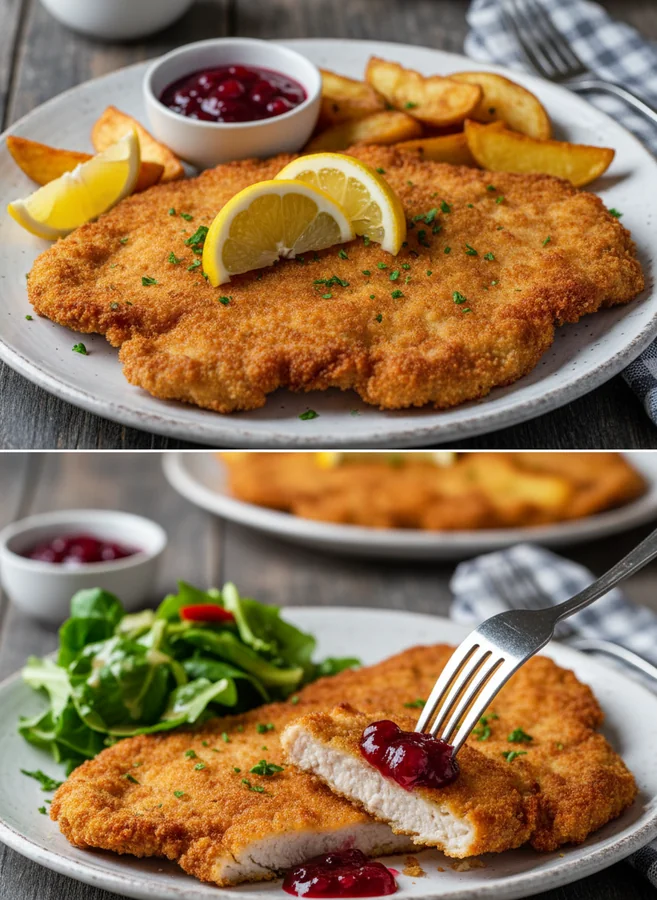
Here’s a detailed recipe for making classic German Schnitzel, a delicious breaded meat dish typically made with veal or pork. This recipe will guide you through preparing tender, crispy schnitzels that serve well with various sides.
Schnitzel is a beloved dish that has transcended its humble origins to become a staple in many cuisines worldwide. The classic version, made with tender veal or pork, is characterized by its crispy, golden-brown exterior and juicy, flavorful meat inside. This recipe will walk you through the steps to achieve the perfect schnitzel, ensuring that every bite is a delightful experience. Whether you’re serving it for a family dinner or a special occasion, this classic German dish is sure to impress.
Key Takeaways:
- Preparation time: 30 minutes
- Difficulty level: Easy
- Main ingredients: Veal or pork cutlets, breadcrumbs, eggs, flour, lemon, and oil.
- Special techniques: Proper meat tenderizing, breading technique, and frying.
- Storage information: Can be refrigerated for up to 3 days; best when reheated in the oven.
Introduction to Here’s a detailed recipe for making classic German Schnitzel, a delicious breaded meat dish typically made with veal or pork. This recipe will guide you through preparing tender, crispy schnitzels that serve well with various sides.:
The origins of schnitzel can be traced back to Austria, where it is known as Wiener Schnitzel, famously associated with the city of Vienna. Traditionally, this dish is made using veal, but over the years, variations using pork, chicken, and even turkey have become popular. The method of preparing schnitzel involves tenderizing the meat, coating it in flour, egg, and breadcrumbs, and then frying it to perfection.
Schnitzel holds a special place in German cuisine, often served during festive occasions, family gatherings, or simply as a comforting weeknight meal. Its crispy texture and savory flavor make it a favorite among many. The dish is not only revered for its taste but also for its versatility—pairing well with a variety of sides, from potato salad to spaetzle. By mastering this classic recipe, you can bring a taste of Germany into your kitchen and share it with loved ones.
Ingredients for Here’s a detailed recipe for making classic German Schnitzel, a delicious breaded meat dish typically made with veal or pork. This recipe will guide you through preparing tender, crispy schnitzels that serve well with various sides.:
- Veal or pork cutlets (4 pieces): The main ingredient; choose thinly sliced cuts for tenderness.
- All-purpose flour (1 cup): Used for dredging the meat, helping the egg adhere to the cutlets.
- Eggs (2 large): Beaten; create the binding layer for the breadcrumbs.
- Breadcrumbs (2 cups): Provides the crispy coating; traditional recipes use fine breadcrumbs or panko for extra crunch.
- Salt and pepper: For seasoning the meat and coating.
- Vegetable oil (for frying): High smoke point oil is ideal for frying, such as canola or sunflower oil.
- Lemon wedges (for serving): Adds a fresh, zesty flavor that complements the rich schnitzel.
Preparation Steps for Here’s a detailed recipe for making classic German Schnitzel, a delicious breaded meat dish typically made with veal or pork. This recipe will guide you through preparing tender, crispy schnitzels that serve well with various sides.:
1. Prepare the Meat: Start with the veal or pork cutlets. If they are not already thin, place each cutlet between two pieces of plastic wrap and pound them gently with a meat mallet or rolling pin until about ¼ inch thick. This step ensures tender meat.
2. Season the Cutlets: Season both sides of the cutlets generously with salt and pepper. This adds flavor directly to the meat.
3. Set Up the Breading Station: Prepare three shallow dishes. In the first dish, place the flour. In the second dish, beat the eggs until smooth. In the third dish, add the breadcrumbs.
4. Dredge the Cutlets: Take one cutlet and coat it in flour, shaking off any excess. Next, dip it into the beaten eggs, allowing the excess to drip off, and finally coat it thoroughly with breadcrumbs. Press gently to ensure the breadcrumbs adhere well. Repeat this process for all cutlets.
5. Heat the Oil: In a large skillet, heat about ½ inch of vegetable oil over medium-high heat. To test if the oil is ready, drop a small piece of bread into the oil; if it sizzles and browns, the oil is hot enough.
6. Fry the Schnitzels: Carefully place the breaded cutlets into the hot oil, making sure not to overcrowd the pan. Fry for about 3-4 minutes on each side, or until golden brown and crispy. Use tongs to flip them carefully.
7. Drain Excess Oil: Once cooked, transfer the schnitzels to a plate lined with paper towels to absorb any excess oil.
8. Serve: Serve hot, garnished with lemon wedges. Pair with your choice of sides for a complete meal.
For a delightful addition to your meal, consider trying a refreshing cucumber salad as a side dish. You can find a recipe for that No Bake Graham Tiramisu Kuchen.
Flavor Profile of Here’s a detailed recipe for making classic German Schnitzel, a delicious breaded meat dish typically made with veal or pork. This recipe will guide you through preparing tender, crispy schnitzels that serve well with various sides.:
The flavor profile of schnitzel is a harmonious blend of savory and zesty notes. The breading is crispy and golden, providing a satisfying crunch with each bite. Inside, the meat is tender and juicy, with a mild flavor that pairs beautifully with the crispy exterior. The addition of freshly squeezed lemon juice brightens the dish, adding a refreshing contrast to the richness of the fried coating.
The aroma wafting from the kitchen while the schnitzel is frying is nothing short of mouthwatering. It’s a tantalizing mix of savory meat and toasty breadcrumbs that invites everyone to the table. When served with sides like creamy potato salad or tangy coleslaw, the flavor experience is elevated, making schnitzel a beloved dish in many households.
Benefits of Here’s a detailed recipe for making classic German Schnitzel, a delicious breaded meat dish typically made with veal or pork. This recipe will guide you through preparing tender, crispy schnitzels that serve well with various sides.:
When prepared thoughtfully, schnitzel can be a nutritious meal option. Veal and pork are both excellent sources of high-quality protein, essential for muscle development and overall health. They are also rich in vitamins and minerals, including B vitamins, iron, and zinc.
The method of frying in oil allows for a crispy coating that can be enjoyed in moderation. Pairing schnitzel with fresh vegetables or a light salad can contribute additional fiber and nutrients to the meal, creating a balanced dish. By making schnitzel at home, you can control the ingredients and portions, allowing for a healthier version compared to many restaurant offerings.
If you’re looking for a hearty side, consider trying your hand at making homemade potato salad, which complements schnitzel beautifully. Discover the recipe for that Brotaufstrich Rezept.
Serving Suggestions for Here’s a detailed recipe for making classic German Schnitzel, a delicious breaded meat dish typically made with veal or pork. This recipe will guide you through preparing tender, crispy schnitzels that serve well with various sides.:
Schnitzel is incredibly versatile when it comes to serving suggestions. Traditionally, it is served with lemon wedges, which adds a zesty kick that brightens the dish. Classic sides include creamy potato salad, tangy coleslaw, or a simple green salad with vinaigrette.
For a heartier meal, consider serving schnitzel alongside spätzle, a type of soft egg noodle popular in German cuisine. You could also pair it with braised red cabbage for a touch of sweetness and acidity. For those who enjoy a touch of the Mediterranean, a side of tzatziki or a Greek salad can create a delightful fusion of flavors.
Additionally, schnitzel can be enjoyed in sandwiches or wraps, making it a versatile option for lunch or a casual dinner. The possibilities are endless, and you can mix and match sides to create your perfect schnitzel meal.
Storage Tips for Here’s a detailed recipe for making classic German Schnitzel, a delicious breaded meat dish typically made with veal or pork. This recipe will guide you through preparing tender, crispy schnitzels that serve well with various sides.:
To store leftover schnitzel, allow it to cool completely, then place it in an airtight container. Schnitzel can be refrigerated for up to 3 days. When reheating, it’s best to avoid the microwave, as it can make the coating soggy. Instead, reheat schnitzel in the oven at 350°F (175°C) for about 10-15 minutes or until heated through and crispy again.
If you wish to freeze schnitzel, it’s recommended to do so before frying. To freeze, place the breaded cutlets on a baking sheet in a single layer and freeze until solid. Once frozen, transfer the cutlets to a freezer-safe container or bag. They can be stored this way for up to 3 months. When ready to cook, simply fry from frozen, adding a couple of extra minutes to the cooking time.
Conclusion:
Schnitzel is more than just a meal; it’s a delightful experience that brings comfort and joy to the table. With this detailed recipe, you can create tender, crispy schnitzels that will impress your family and friends. Whether enjoyed with traditional sides or your personal favorites, schnitzel is sure to become a beloved dish in your household. So roll up your sleeves and give this classic dish a try—you won’t regret it!
FAQ Section:
1. Can I use chicken instead of veal or pork?
Yes, chicken schnitzel is a popular variation and can be made using boneless, skinless chicken breasts.
2. What can I use instead of breadcrumbs?
Panko breadcrumbs offer a lighter, crispier texture, but you can also use crushed crackers or cornflakes for a gluten-free option.
3. How do I know when the oil is hot enough?
You can test the oil by dropping a small piece of bread into it; if it sizzles and browns quickly, it’s ready for frying.
4. Can I prepare schnitzel in advance?
Yes, you can bread the cutlets ahead of time and store them in the fridge until you’re ready to fry them.
5. What sides pair well with schnitzel?
Popular sides include potato salad, coleslaw, spaetzle, and various fresh salads.
6. How do I keep the schnitzel crispy when reheating?
Reheat in the oven to maintain the crispiness, avoiding the microwave if possible.
7. Is schnitzel a healthy option?
When made with lean cuts of meat and balanced with fresh sides, schnitzel can be a nutritious meal.
8. Can I make schnitzel gluten-free?
Yes, you can use gluten-free breadcrumbs and flour to create a gluten-free version of schnitzel.
Here’s a detailed recipe for making classic German Schnitzel, a delicious breaded meat dish typically made with veal or pork. This recipe will guide you through preparing tender, crispy schnitzels that serve well with various sides.
INGREDIENTS
- 4 boneless pork chops (about 5-6 oz each, thinly pounded)
- Salt and freshly ground black pepper, to taste
- 1 cup all-purpose flour
- 2 large eggs
- 1 cup dried bread crumbs (preferably plain or panko for extra crunch)
- 1/2 teaspoon paprika (optional)
- 1/4 cup unsalted butter (for frying)
- 1/4 cup vegetable oil (for frying)
- Lemon wedges (for serving)
- Parsley, chopped (for garnish)
- Traditional sides (potato salad, spaetzle, or fries)
INSTRUCTIONS
Pound pork chops to about 1/4 inch thick and season with salt and pepper.
Set up a breading station with flour, beaten eggs, and bread crumbs mixed with paprika.
Dredge each chop in flour, dip in eggs, and coat with bread crumbs.
Heat butter and oil in a skillet, fry schnitzels for 3-4 minutes on each side until golden brown.
Serve hot with lemon wedges and parsley, alongside traditional sides.
NOTES
Enjoy your delicious homemade Here’s a detailed recipe for making classic German Schnitzel, a delicious breaded meat dish typically made with veal or pork. This recipe will guide you through preparing tender, crispy schnitzels that serve well with various sides.!